
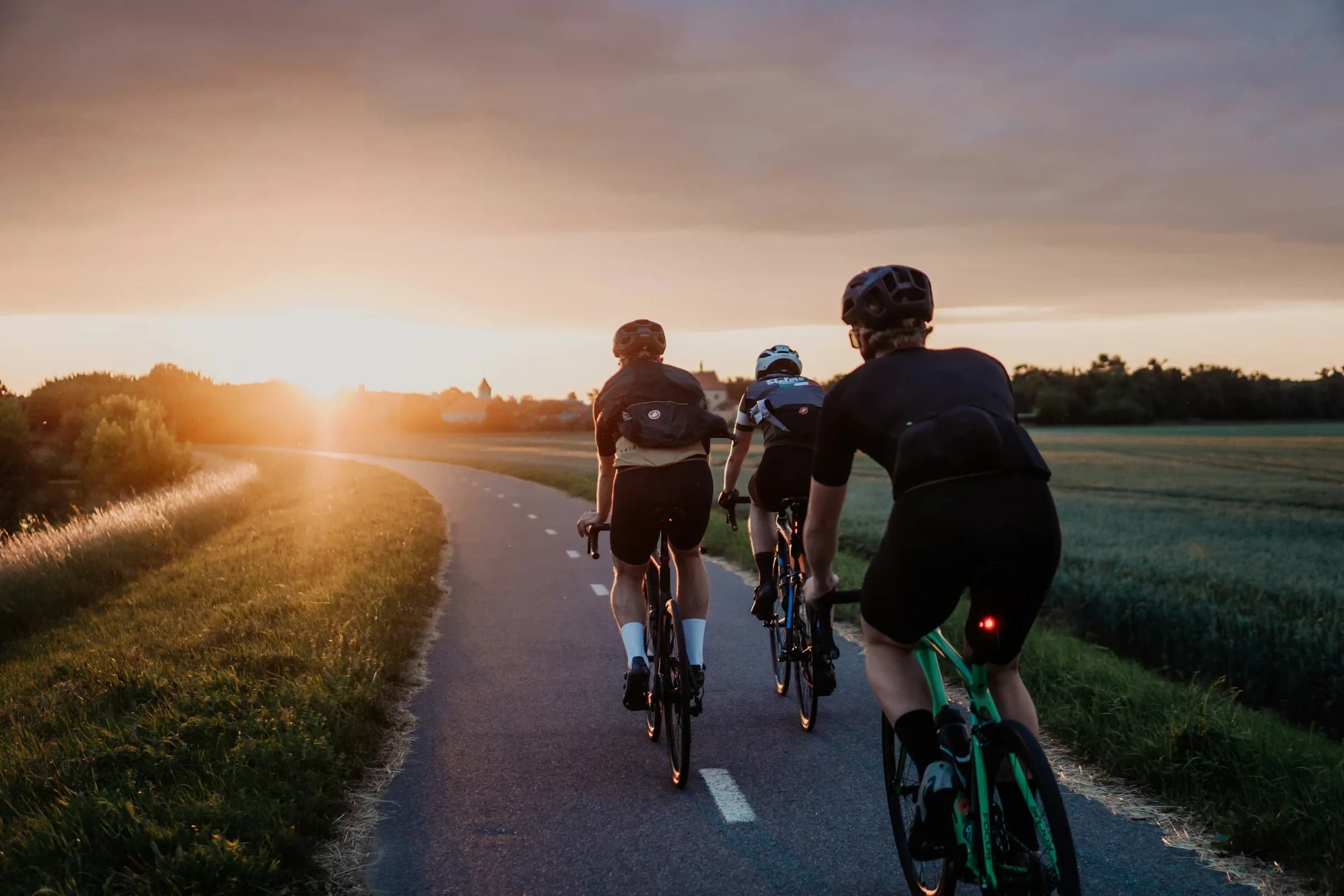
Yes. Riding every day is fine for most riders, and plenty of people do it for years. What isn't fine is riding hard every day. The number of days was never the problem. The number of hard ones is.
People ask this for one of two reasons. Some have gotten into the habit of riding daily and wonder whether they should be taking days off. Others are looking at a multi-day trip and have never ridden more than two days in a row. Both get the same answer.
Ride every day, but ride most of it easy
You can ride every day as long as most of those rides are easy. A week that works for a serious rider has one or two hard days in it, and the rest are ridden at a pace where you could hold a conversation the whole way. Ride hard every day and within a couple of weeks you'll be slower, sleeping worse and less eager to get on the bike.
A multi-day trip is a different case, because it's a short stretch of riding and not a habit. Days of solid riding in a row are fine for a fit rider who eats and sleeps properly. Then you go home and take it easy for a few days.
Why easy days are what make daily riding work
Stephen Seiler, a sport scientist at the University of Agder in Norway, studied how elite endurance athletes actually train, cyclists included. He found they do about 80% of their training at low intensity, most of the rest very hard, and very little in between. These are people who ride most days of the year.
The easy riding isn't wasted. It builds aerobic fitness and costs very little to recover from, which is why you can do it again tomorrow. Hard riding builds a different kind of fitness and costs a lot. If every ride is a fast group ride or an all-out try at a Strava segment, there's no easy riding left in the week to recover on.
The mistake most club riders make is riding in the middle. Every ride is a bit too hard to be easy and not hard enough to be a real workout. It feels productive while you're doing it. It also leaves you tired all the time.
How easy is easy? You can talk in full sentences without noticing your breathing. With a heart rate strap, that's comfortably below the effort of your normal group ride. Most riders find it slower than they expect.
Why cycling is easier to do every day than running
When you push a pedal, the muscle shortens as it works. When you run, each leg lands hundreds of times a mile, and the muscle has to lengthen under load to absorb the landing. That lengthening work is what causes most of the soreness people get after exercise, and cycling has very little of it.
So a rider can ride more days in a row than a runner could. In one randomized trial, people who rode at a moderate pace in the two days after a hard, muscle-damaging workout reported less soreness than people who rested completely. That matches what most riders already know: an easy spin the day after a big ride often leaves your legs feeling better than a day on the couch.
What riding day after day actually feels like
Day one, your legs are fresh and everyone rides a little faster than they should. Day two, your legs feel heavy for the first twenty or thirty minutes and then feel normal again. Day three is the one people ask about. Your legs feel heavier for longer, and how much you ate and slept the two nights before decides how the day goes.
That's why a good trip puts its hardest day in the middle, keeps a shorter day either side of it, and never schedules two big days back to back. Before you book, look at the miles and the climbing for each day, not just the total.
How much can the body take? The Tour de France runs 21 stages in 23 days, with two rest days. Those riders are professionals, so that's not a target for you. It does show that the body can handle a lot of consecutive days when the food and the sleep are taken care of. A few days in a row is well inside what a fit amateur can handle.
Three things decide whether day three is good:
- Eating enough the day before. Most riders eat far less than a long day costs them, and on a trip the shortfall carries into the next morning. There's more on that in what to eat on a bike tour.
- What you do in the hour after each ride. Eat, drink fluids with salt, get out of your kit and shower. The full list is in what to do after a long bike ride.
- Sleep. On a trip the evenings run long. Eight hours is worth more to day three than anything else you can do.
Ask before you book what happens if you wake up on day three and don't want the whole ride. On a well-run trip you can ride part of the route and turn back, or sit the day out. That option is what lets you ride hard on the days you feel good. You can see how each of our trips lays out its days on its own page.
When to take a day off
Riding every day is fine. Riding through these isn't:
- Your morning resting heart rate is up and stays up. In one study of recreational endurance athletes, morning heart rate went from about 52 beats a minute to about 59 in the days after a block of harder training.
- Your legs never feel normal. Heavy for the first half hour is normal. Heavy for the whole ride, at an easy pace, is a sign you need a day off.
- You can't get your heart rate up. If a hard effort feels hard but your heart rate or power won't climb to its usual numbers, you're more tired than you think.
- You're sleeping badly, you're irritable, or you've stopped wanting to ride. Those count as much as the numbers do.
- You have pain in one spot. A sore knee or a sore Achilles that gets worse as you ride isn't fatigue. That's an injury, and riding through it makes it worse.
One bad day isn't a pattern. Three in a row is.
How to ride every day at home without wearing yourself down
- Keep the hard rides to one or two a week. Ride everything else easy enough to talk.
- Make one day a week very short. Thirty to forty-five minutes of easy spinning still counts as riding every day.
- Eat enough carbohydrate. Riding every day on too little food is the quickest way to feel tired and slow for weeks.
- Look at the whole week. If the week has been hard, the next ride is easy no matter how good you feel that morning.
Getting ready for back-to-back riding days
If you're training for a trip, the most useful thing you can do is ride two and three days in a row at home before you go. A Saturday long ride followed by a Sunday ride on tired legs teaches you what day three feels like, and it shows you whether your saddle, your shorts and your eating hold up. The full plan is in how to train for a multi-day cycling tour.