
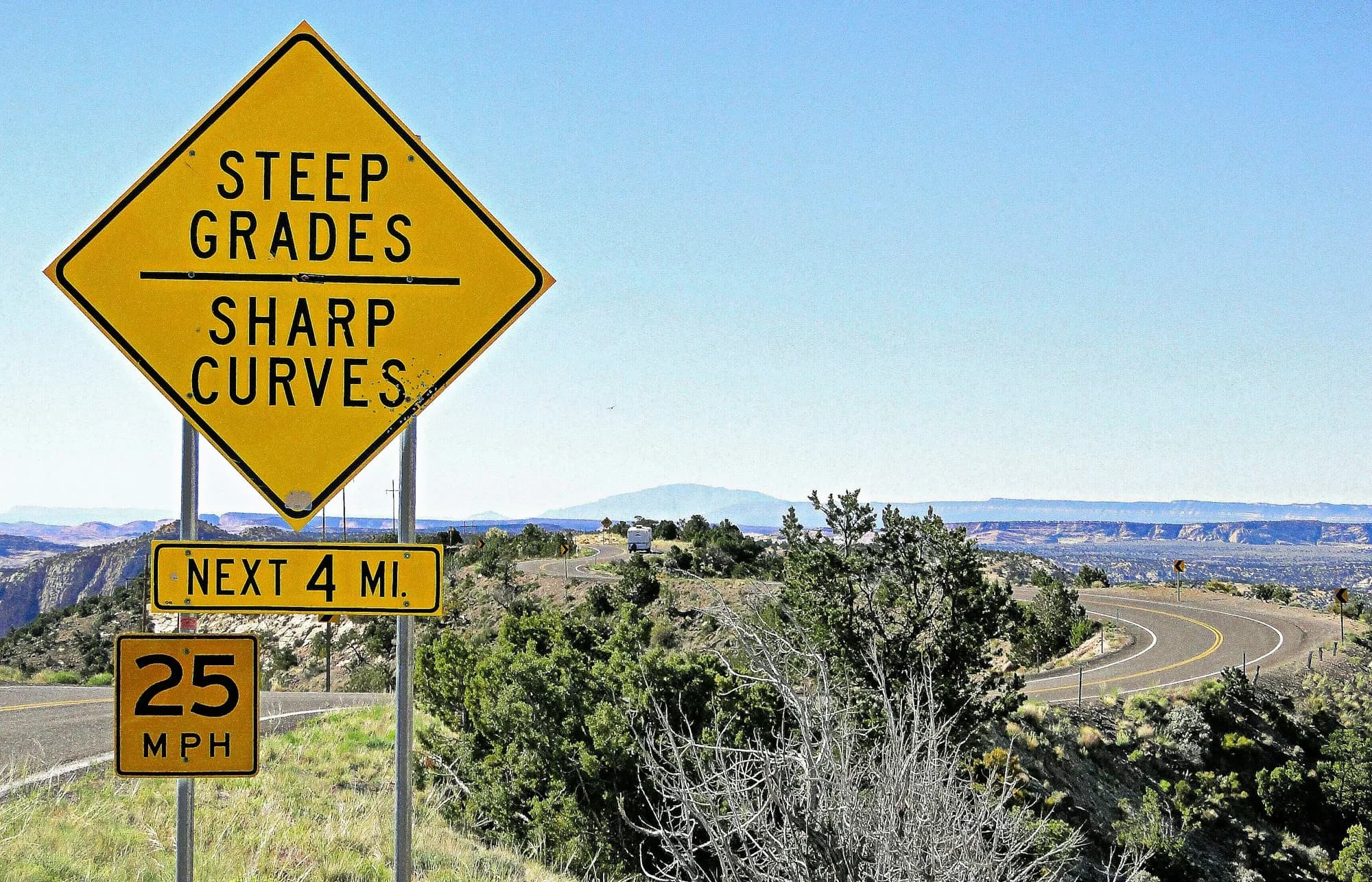
When riders ask me how to train for hills, they're asking one of two questions, and most of them haven't decided which. How do I get up a climb that goes on for an hour or more? Or how do I get over twenty short, steep hills in a row without running out of energy? Those are trained differently. Which one does your ride have?
I lead road cycling trips and I ride every mile of them, and most of them have real climbing in them. Here's how I'd get ready for both kinds.
The short answer
Find out which kind of hill your ride has. For a long climb, practice holding one steady, hard effort for 20 to 60 minutes. For short, steep hills, practice hard efforts of one to three minutes with an easy recovery in between. For both, fit easier gears than you think you need, hold back for the first few minutes of every climb, and ride hills on tired legs a few times before you go.
Long climbs and short hills are two different problems
Mount Lemmon outside Tucson is the long kind. It's about 28 miles of climbing and a little over 6,000 feet, and from the bottom to Summerhaven it averages a bit over 4%. That isn't steep. What makes it hard is that it doesn't stop. At 8 to 10 miles an hour, which is a normal speed on a grade like that, you're climbing for about three hours.
The Texas Hill Country is the other kind. You won't find a 20 mile climb anywhere in it. You'll find hills that last a few minutes at 8 to 12%, one after another, all day.
On a long climb, the question is whether you can hold one effort for hours without fading. On short hills, it's whether you can go hard for two minutes, recover on the way down, and do it again twenty times. Plenty of riders are good at one and bad at the other.
So look at the route before you train. Is the climbing in one climb measured in miles, or in a lot of hills measured in minutes? A good trip publishes the miles and the feet of climbing for every day, and the route file will show you where the climbing is.
How do you train for a long climb?
You're training to hold one steady effort for a long time, and long steady intervals are how you build it.
Once or twice a week, ride efforts of 10 to 20 minutes at a pace you could hold for about an hour if you had to. You're breathing hard, and you can still say a short sentence. Start with two of them, with five easy minutes in between. Build toward three or four, and then toward one block of 40 to 60 minutes. A long hill is the best place to do these. A flat road ridden into a steady wind works too, and so does an indoor trainer.
Then practice the first ten minutes. Almost everyone starts a long climb too hard, because their legs are fresh and the bottom feels easy. That extra effort is what leaves you tired in the top half. Hold back until you've been climbing for 15 or 20 minutes, and only then decide whether you've got more. If you ride with a power meter or a heart rate monitor, pick a number you know you can hold for an hour and stay under it at the bottom.
Stay seated most of the way. Standing costs more energy over a long climb, so save it for the steep pitches and for a minute out of the saddle every few miles to stretch your back.
And eat on the way up. Three hours of climbing is three hours of hard work, and you won't feel hungry until it's too late to fix. I wrote up how much to eat and when in what to eat on a bike tour.
How do you train for short, steep hills?
Short hills take a hard effort, a recovery, and then another hard effort before you're fully back.
Hill repeats are the workout. Find a hill that takes you one to three minutes to ride up. Ride it hard but not flat out, roll back down easy, and go again. Start with four or five and build toward eight or ten. The ride back down is your recovery, which is exactly what a hilly route gives you.
Once a week, ride a hilly loop at home at the pace your group rides, and keep that pace over the tops of the hills instead of easing off at the crest. That's where a group splits, so it's where you want to be practiced.
Technique matters more on short hills than on long ones. Carry your speed into the bottom. Shift to an easier gear before the road gets steep, not halfway up it, and shift one gear at a time. Shifting under a heavy load at 10% is how chains come off. Stand for the steepest part if you need to, and sit back down when it eases.
Don't race every hill. On a day with fifty of them, the rider who goes hard up the first ten is the one who suffers through the last ten.
Fit easier gears than you think you need
Look at your easiest gear: the small chainring on the front and the biggest cog on the back. If that's a 34 on the front and a 28 on the back, a cassette with a 32 or a 34 will make every steep hill easier and let you keep your legs turning on a long climb. Ask your bike shop whether your rear derailleur can take it, because some can't without a longer cage. Do it a few weeks before your trip so you've ridden on it.
Why does it matter? Grinding a big gear at a slow cadence puts more force through your legs on every pedal stroke. Over an hour of climbing, that's what tires them out. An easier gear lets you climb at a cadence you could hold all day.
Can you train for hills if you live somewhere flat?
Yes, most of the way. What you're training is the ability to hold a hard effort, and you can build that without a hill.
- Ride into the wind. Pushing into a steady wind for twenty minutes takes the same effort a climb does.
- Use an indoor trainer. Long steady intervals are easier to hold on a trainer than outside, and many training apps will put a real climb's profile on the screen and change the resistance to match it.
- Use whatever height you've got. A bridge, an overpass or a levee is a short hill you can ride over and over.
- Do some seated work in a bigger gear at a slower cadence, around 60 to 70 revolutions a minute, for 5 to 10 minutes at a time. It builds the strength you need on a steep pitch.
What a flat place can't give you is the feel of being on one climb for an hour with nothing changing. The trainer is the closest you'll get, so do your longest steady blocks there.
Practice the descents too
Every climb has a way down, and a long descent takes skills you don't use on flat roads. Your hands get tired from braking, and you get cold, because you're going fast, you're not working, and you're wet with sweat from the climb.
Practice on the descents you have. Brake before the corner, not in it. Look through the turn to where you want to go. Put your weight on the outside pedal. Take a long descent in pieces and stop to shake your hands out if you need to. At the top of a long climb, put a jacket on before you start down, even when it's warm at the top.
Ride hills on tired legs before the trip
A hilly trip is three or four hilly rides in a row. The workout that matters most for any multi-day trip is riding on back-to-back days, and for a hilly trip, make both days hilly. I wrote up how to build those weekends in how to train for a multi-day cycling tour.
How do you know you're ready?
For a long climb, you're ready when you can ride for an hour at the effort you'd climb at, eat while you do it, and still have something left at the end. For short, steep hills, you're ready when you can ride a hilly loop at your group's pace and you aren't the one everyone waits for at the top. For either kind, you're ready when you've done that on the second day of a back-to-back weekend.
What changes on a guided trip
On the big climbing days on our trips, there's no group pace. Everyone climbs at their own speed, the support vehicle moves up and down the group checking on people, and we regroup at the top. You don't have to match the fastest climber, and nobody's left alone at the bottom either. Water, food and a jacket for the descent are in the vehicle.
You still have to ride up the climbs, and that's the part this training is for. If you want to see the kind of climbing our trips are built around, every trip on the trips page shows the miles and the feet of climbing for each day.