
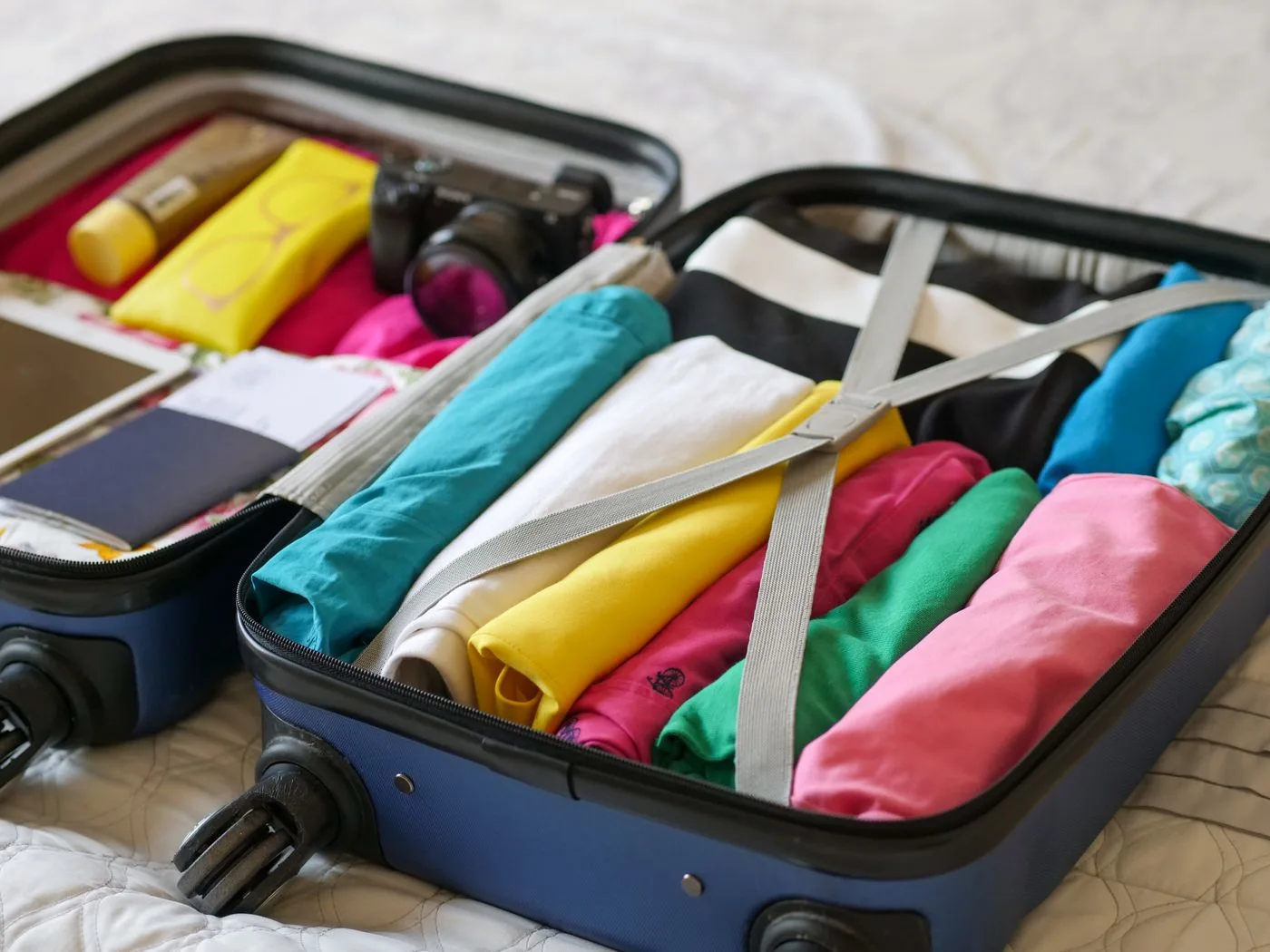
Most people asking this are worried about two things at once. They don't want to be cold at 7 a.m., and they don't want to haul a suitcase of clothes they never put on. Both worries are fair, and there's one answer to both of them. You dress for the morning, you carry the two or three small pieces that get you through the afternoon, and you bring far less than you think.
I run these trips and I ride every mile of them, so I've watched a lot of riders unpack. The ones who get it right aren't the ones with the most gear. They're the ones who worked out the temperature swing before they packed.
The morning and the afternoon are two different days
That's the whole problem in one sentence. On a good riding week the temperature at roll-out and the temperature at lunch are twenty to thirty degrees apart, and you've got to be comfortable in both while carrying whatever you take off.
Here are two real examples from our own trips.
At our Fredericksburg camp in late October, mornings sit in the upper 50s and the day warms into the mid to upper 70s under dry blue skies. You roll out wanting sleeves and you finish wanting none.
At our Tucson camp in early April, mornings are in the low 50s and afternoons reach the low 80s. Then there's Mount Lemmon, which has weather of its own. The summit sits over 9,000 feet and runs 15 to 20 degrees cooler than the valley floor. You can start a day in one climate and finish a climb in another.
So the question isn't "what do I wear?" It's "what do I wear at 7 a.m. that I'm still happy in at 2 p.m., and what small things do I add and take off in between?"
What you wear on the bike, every single day
The base is the same on every trip I've ever run, in any weather.
- A jersey with a full zip. The zip isn't a style choice. It's your first temperature control and you'll use it on every climb and every descent.
- Bibs or shorts. Both work for a week of long days, and which one you ride in is personal preference, not a rule.
- Cycling socks and cycling shoes.
- Gloves. Padded, short-fingered, for warm days.
- Riding glasses. Sun, wind, grit, and the bug that would otherwise find your eye on a descent.
- A helmet. No helmet, no ride, on our trips and on most others.
- Chamois cream, which isn't clothing but belongs in this list anyway. Day one you can skip it. Day four you won't want to.
That's the outfit. Everything else on this page is a layer you add to it or take off it.
The four small layers that cover the swing
You don't need a second wardrobe for cool mornings. You need four things that fit in a jersey pocket or in the support vehicle.
Arm warmers. The most useful piece of clothing on a multi-day tour. They turn a short-sleeve jersey into a long-sleeve jersey, they come off at a stoplight without taking anything else off, and they roll down to nothing in a pocket. If you bring one item from this page, bring these. Our Fredericksburg trip page ends its weather note with three words: bring arm warmers.
Knee warmers. Same idea, lower down. Under about 60 degrees your knees will thank you, especially on a week where you're riding hard every day.
A vest. A wind vest with a mesh back is the most under-owned piece of kit in cycling. It keeps your chest warm while letting your back breathe, which is exactly what you want on a climb in cool air. It packs down to about the size of a banana.
A packable shell. Light, wind and rain resistant, stuffs into a pocket. You won't wear it most days. On the day a cool front comes through, it's the difference between a good ride and a long shivering one.
Full-fingered gloves are a fifth piece worth adding if you run cold or if there's a long descent on the schedule.
The coldest you get all day is on the way down
Riders under-dress for descents more than for anything else, and it's easy to see why. You climb, you get hot, you unzip everything, you crest the top soaked in sweat, and then you stop making heat while moving fast through cold air. Wet fabric plus wind plus no effort is genuinely cold, and being cold on a fast descent is a bike handling problem, not just a comfort problem.
The fix is simple. Put the layers back on at the top, before you start down, not once you're already shaking. Zip the jersey. Pull the arm warmers up. Put the vest back on.
On a supported trip this is easier, because you're not carrying it all. On our Tucson camp the support vehicle meets riders at the top of Mount Lemmon and carries extra layers for the descent, which drops more than 6,000 feet. Ask your operator whether they do that. If they do, you can dress for the climb and let the van hold what you need for the way down.
Three sets of kit is the right number for a week
Here's where most people over-pack. You don't need a clean jersey for every day.
Bring three full sets. A kit is socks, shorts or bibs, and a jersey, so three of them take up very little room and add almost no weight. Why three? Because kits can take a couple of days to dry. One set is on you, one is clean and ready, and one is drying. Two sets only works if everything dries on schedule, and it doesn't always.
Three is the right answer for a week and for almost any trip. There's one exception. Under about three days, two sets are plenty.
Bring laundry pods or laundry sheets. They weigh nothing, they take up no space, and a sheet goes straight in with the clothes. You'll want them. On a hub trip you're in the same room every night, which makes this the easiest laundry situation you'll ever have.
What if you don't like the idea of washing your kit, or having it washed? Then you need a set for every day of the trip. I wouldn't suggest it, but that's the honest answer.
The full item-by-item list, including the off-bike side, is in our cycling tour packing list.
What to wear when it's hot and dry
Warm-weather riding rewards less fabric and more sun cover, which sounds like a contradiction until you've done it.
Light-colored jersey. A jersey with a mesh or perforated fabric if you've got one. Sun sleeves, which are white arm covers that keep the sun off without adding heat, are worth more than most people expect in a place like Arizona. Sunscreen on everything the kit doesn't cover, reapplied at the lunch stop. The back of your neck and the tops of your ears are the two places everyone forgets.
Desert riding also hides how much you're sweating, because it evaporates before you feel wet. Dry air isn't gentle air. Drink more than you think you need and take the salt.
What to wear when it rains
A packable shell, full-fingered gloves, and the acceptance that your feet are going to get wet. Waterproof socks help. Overshoes help more if you own them. Nothing keeps you fully dry in real rain over several hours, so the goal is staying warm while wet, not staying dry.
One thing worth adding: clear or light-tinted lenses for your glasses. Dark lenses in grey rain make a wet road harder to read, and reading the road is the whole job in those conditions.
What to wear off the bike
Less than you're imagining. Nobody on a cycling trip dresses up.
You need comfortable clothes for the evening, one pair of shoes you can walk in, and something to put on your feet in the room. On our Fredericksburg camp the group dinner is at an Italian place a short walk from the hotel, and people arrive in comfortable bottoms and a shirt. That's the standard on almost every trip like this. A jacket or a sweater matters more than anything smart, because a warm afternoon turns into a cool evening once you've stopped riding and your body is running on empty.
One genuinely useful item: something with a soft waistband to change into right after the ride. After five hours in a chamois, the last thing your skin wants is denim.
What not to bring
Anything brand new. A jersey you've never worn, shoes you haven't broken in, a saddle you just fitted. Day one of a multi-day trip is the worst possible place to discover a seam that rubs. Everything you bring should have at least one long ride on it already.
Baggy clothing for the bike. Loose fabric flaps, holds water, and makes you cold on descents.
Full winter kit for a warm-weather trip. What you want here depends on how wide the day's temperature range is, not on the morning low by itself. If it starts in the 50s and climbs into the 70s or 80s, arm warmers and a vest cover the whole day and a thermal jacket is dead weight. If the range is narrow and the day stays in the 50s and only tops out in the low 60s, a cycling-specific long-sleeve jacket is the right call. On most weeks we run, the range is wide enough that arm warmers and a vest are the answer.
A different outfit for every day. Three sets and a few laundry pods or sheets.
The short version
Bring three sets, and a set is a jersey, bibs or shorts, and socks. Shoes, gloves, glasses and a helmet you bring once. Two sets are enough only on a trip under about three days. Add arm warmers, knee warmers, a wind vest and a packable shell, which together weigh almost nothing and cover every temperature you'll meet. Put those layers back on at the top of the climb, not at the bottom. Pack laundry pods or sheets and wash a set each evening. Off the bike, bring comfortable clothes, one pair of walking shoes, and a warm layer for the evening.
Then stop packing. The riders who enjoy the week most are the ones who spent that energy on their legs instead of their luggage.
Want to see what a real week looks like, including the actual temperatures we plan around? Our Fredericksburg Hill Country Training Camp runs October 23 to 26, 2026, and our Tucson Training Camp runs April 7 to 11, 2027. I'm on both of them, riding every mile with you, and I'll be wearing arm warmers at the start of every single day.