
If you can drive to the start, put the bike on the car and you're done. Everything below is for the trip you have to fly to.
There are three ways to get your bike there. You can fly with it, packed in a bike travel bag. You can have your local bike shop box it and ship it to a bike shop at the other end. Or you can leave your bike at home and rent one that's been set up to your measurements.
I fly with mine in a bag, every trip, and I'll get to why. First, here's how each one actually works. All three get you to the start with a bike that fits, and which one is right for you depends on what you're willing to give up.
Flying with your bike in a bike travel bag
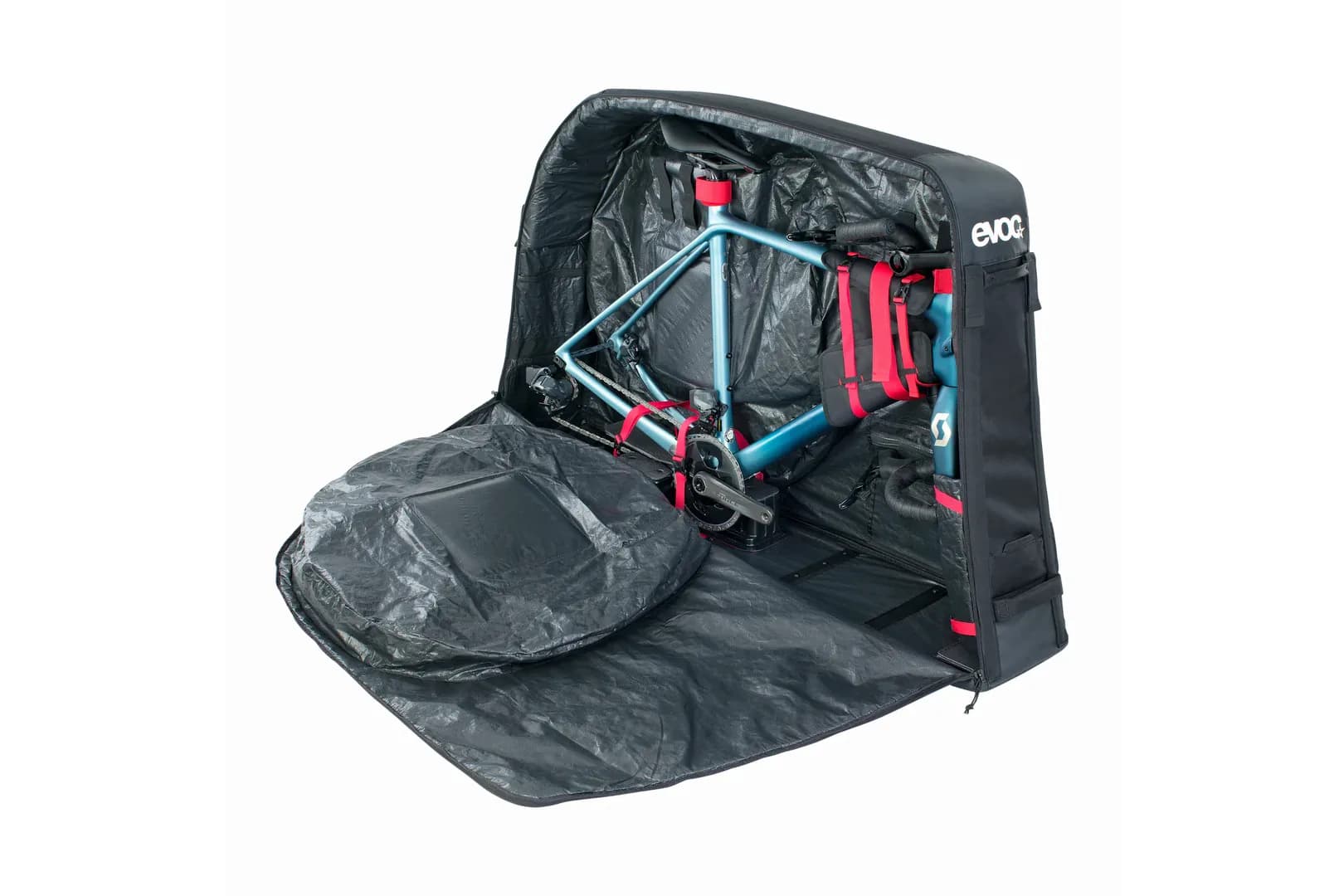
You take a few parts off at home, pack the bike in the bag, check it at the airport, and put it back together when you land.
What does that cost? On most US airlines a bike bag is treated like a large checked suitcase, so it costs no more than one. I went through what five airlines actually charge, and the weight limit people go over, in how much it costs to fly with your bike. Airlines change these policies, so check your airline's latest bike bag policy before you fly, every time.
How much do you have to take apart? The pedals come off, the wheels come out, and the rear derailleur hanger comes off so it can't get bent in transit. Some bags made for road bikes have a harder top section that lets you leave the seat and the handlebars on, as long as your handlebars are narrow enough to fit. That's less to take off at home and less to put back on when you land.
Not comfortable putting the bike back together yourself? Then don't. Take the bag to a bike shop at the destination and have them build it for you.
Having your bike shop box it and ship it
This one keeps you on your own bike without you picking up a tool. Your local bike shop takes your bike's measurements, takes it apart, boxes it and ships it to a bike shop at the destination. That shop builds it back up to the same measurements, so it's set up exactly the way it was at home. After the trip, the same thing happens in reverse.
Will your local shop do this? Ask them. Then ask the shop at the destination too, because it has to be willing to receive the box, build the bike, and pack it up again for the trip home. Don't assume either one.
The bike has to be built and waiting for you when you arrive, so it has to leave home well before you do. Ask the shop at the destination how much time it needs to build the bike, and count back from the day you land.
You also pay shipping both ways, once to get the bike there and once to get it home.
Renting a bike set up to your measurements
Before you go, ask the shop you're renting from which measurements it needs to set a bike up to fit you. Every shop has its own list, so don't guess. Have your local bike shop take those measurements off your own bike, send them to the rental shop, and it'll have a good-quality rental fitted to you and waiting when you arrive.
Ask what the rental comes with before you book it. Which groupset is on it? Does it come with pedals, or do you bring your own? What crank length is it? Does it have a power meter?
If you're going on a guided trip, ask the company which bike shop it works with at the destination. That's the shop to send your measurements to, and the earlier you book, the better the rental you'll get. You can see every trip we're running on our trips page.
Why I fly with my bike in a bag
My bag is from EVOC, and it's held up well for me, trip after trip.
I want my own bike. I want my crank length and my handlebars, and I want electronic shifting and disc brakes. Rental shops don't always have all of that.
I don't want to be without it. Shipping means my bike is gone for a week or more before the trip and a week or more after it. I ride almost every day, so that's a long time off my own bike.
A shipped bike can get lost. So can a bag on a flight, but it isn't the same thing. When an airline loses your bag, it has a team whose job is to track it down and get it to you. A box that goes missing in shipping can stay missing for good.
Learning to take a few parts off and put them back on taught me more about how my own bike works.
I have my bike soon after I land. There's no shop to visit at either end of the trip.
When something does break in transit, it's usually a wheel, or a derailleur hanger that got bent or snapped. Both are a simple fix at a bike shop. That's why the hanger comes off before the bike goes in the bag. It and the other two things I do before I close the bag are in the post on flying with your bike.
What are the downsides? There are two.
The first is the cost of the bag, up front. If you're planning more than one trip, it turns into a saving, because after two or three trips a good bag has cost less than shipping would have. If you're not sure you'll fly with a bike again, ask your local shop whether it rents bags.
The second is getting the bag from the airport to your hotel. A big bag that doesn't fold down needs a bigger rideshare or a bigger rental car. A lot of the better bags now fold down once the bike is out, and the bike and the folded bag fit in an ordinary car. Check that before you buy one.
Which one should you pick?
If riding your own bike matters to you and you'll fly to more than one trip, buy a bike travel bag.
If you want your own bike and you don't want to take anything apart, have your shop ship it, and sort out the timing with both shops before anything else.
If a bike that fits you is enough, rent one set up to your measurements, and ask what it comes with before you book it.
Whichever one you pick, the rest of what goes in your suitcase is its own list: what to pack for a multi-day cycling tour.