
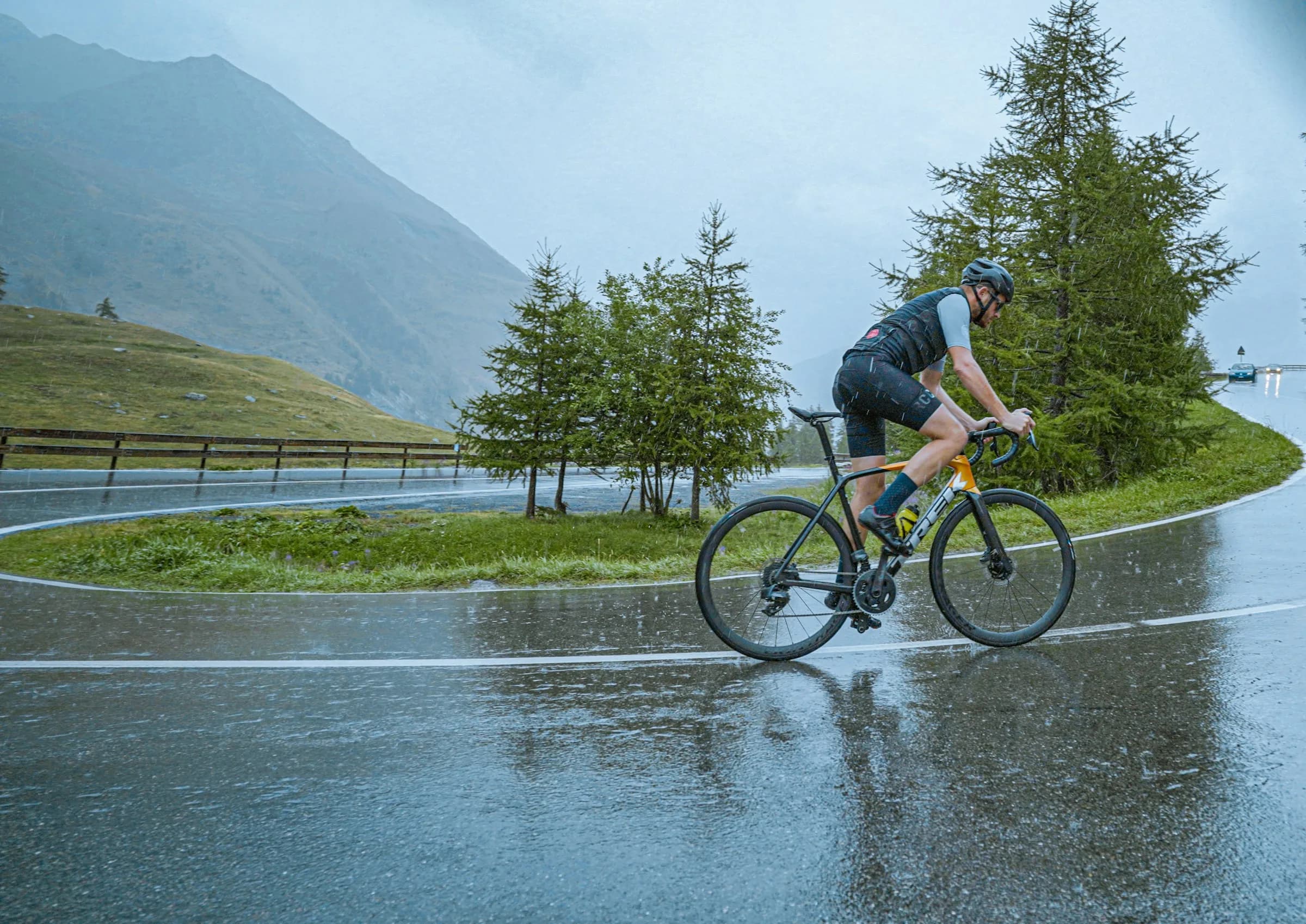
Yes. Most bike tours ride in the rain, and a wet day is still a riding day. Rain on its own isn't what stops a ride. Lightning, water running across the road and cold rain on a long descent are. Steady rain on a mild day just means you ride a little slower, brake earlier and wash your kit that night.
I run our trips and I ride every mile of them, so when it rains, I'm out in it with everyone else. Here's how a rain day actually goes on a guided bike tour, what to bring, how to ride a wet road safely, and when to stop.
What happens on a guided bike tour when it rains
A tour doesn't get canceled because of rain. The hotels are booked and the routes are planned, so on most wet days the group still rides. What changes is the plan for that day. Depending on the forecast, whoever is leading the ride can:
- Start later so the worst of it passes first, or earlier to get ahead of an afternoon storm.
- Shorten the day, or pick a route with fewer long descents.
- Wait out a passing storm over a long coffee stop.
- Hold the group indoors if there's lightning or water over the roads, and ride once it clears.
What if you'd rather not ride in it? That's your call. On our trips we ride as a group, and if the weather turns you can take a shorter way to the hotel or sit the day out. A day you sit out costs the same as a day you ride, so make the call on how you feel that morning.
Before you book any tour, ask what happens on a rain day. A good answer tells you who makes the call and what the choices are. It belongs on the list of questions to ask before booking a bike tour.
How likely is rain on a bike tour?
It depends on where you go and when. Look up the average rainfall for the place and the month before you pack. Here's how different two of the best-known places to ride in the US are:
- Tucson in April is about as dry as riding in the US gets. The National Weather Service's normal rainfall for April in Tucson is 0.24 inches for the whole month.
- The Texas Hill Country gets more. Fredericksburg averages about 3 inches of rain in October, based on NOAA's 1991 to 2020 records, with some rain on about seven days of the month. Pack for at least one wet day there.
Which seasons are driest in which parts of the country is covered in the best time of year to go on a bike tour.
What to bring for riding in the rain
Nothing keeps you dry through hours of real rain. The goal is to stay warm while you're wet. Here's what does that:
- A packable rain shell that's light, wind and rain resistant, and small enough to fit in a jersey pocket. You'll leave it in the pocket most days.
- Full-fingered gloves. Wet hands go numb fast, and you need them working to brake.
- Waterproof socks or overshoes. Your feet will still get wet in a downpour, but they'll stay warmer.
- Clear or light-tinted lenses, because dark lenses on a gray, wet day make the road surface harder to read.
- Arm warmers and a vest. Rain cools the whole day down, and wet clothes in the wind feel much colder than the temperature says.
- A front and rear light. Turn them on in the daytime when the sky goes gray. A driver sees a flashing light long before they see a rider in the rain.
- A zip-top bag for your phone, because jersey pockets fill with water.
Do you need fenders? If your bike has room for them, clip-on fenders help the rider behind you more than they help you. The back wheel throws road water straight up into the face of whoever is on your wheel.
The full list of what to wear, including how to dress for cold mornings, is in what to wear on a bike tour.
How to ride safely on a wet road
- Brake earlier and more gently. With rim brakes, the first part of every stop just wipes water off the rim, so the brakes take a moment to start slowing you. Disc brakes handle water better, but your tires have less grip either way. Do most of your braking in a straight line before a corner, not in it.
- Take corners slower and keep the bike more upright. The less you lean, the less you need from the tires.
- Stay off painted lines, metal plates, manhole covers and cattle guards. Each of these gets slick when wet. If you have to cross one, cross it straight with the bike upright and without braking. A lot of back roads in the Texas Hill Country cross cattle guards.
- Be careful in the first 15 minutes of rain after a dry spell. Oil and grime build up on the road in dry weather, and the first rain lifts it into a slick film. Once it has rained for a while, much of that washes away.
- Let a little air out of your tires. A few psi lower gives a bit more grip on a wet road.
- Ride puddles as if there's a pothole in them. You can't see what's under the water, so go around them when it's safe to.
- Give the rider in front more room. Ride a little further off their wheel, point out hazards earlier and brake smoothly, so the rider behind you is never surprised.
When not to ride in the rain
Rain is fine. These are not:
- Lightning. The National Weather Service's rule is "When thunder roars, go indoors." How close is too close? If you can hear thunder, lightning is close enough to strike you. Get inside a building or a hard-topped vehicle, and wait 30 minutes after the last thunder before riding again. A tree isn't shelter, and neither is a bike.
- Water running across the road. According to the National Weather Service, 6 inches of fast-moving water can knock over and carry away an adult, and 12 inches can carry away a small car. You can't tell how deep it is or whether the road under it is still there. In the Texas Hill Country, back roads cross creeks at low-water crossings that can flood within minutes of heavy rain. If water is running over the road, turn around.
- Cold rain on a long descent. Rain in the 50s with a long, fast descent ahead is how riders get dangerously cold. If you're shivering before the top, you'll be worse at the bottom, and a cold rider doesn't brake or steer well.
- Heavy rain on a busy road. If drivers can't see you, stop somewhere safe and wait for it to ease.
What to do after a wet ride
- Clean and lube the chain that evening. Rain strips the lube off and leaves grit in the drivetrain. Wipe it down, let it dry and lube it before the next day, or you'll hear it squeak by the first climb.
- Look at your brake pads. Wet grit wears rim brake pads quickly. Pick out any bits of metal or stone stuck in them.
- Dry your shoes. Pull out the insoles, stuff the shoes with paper towels or newspaper and leave them somewhere warm overnight.
- Get your kit washed. This is why we tell riders to bring three sets for a week: one on you, one clean and one drying, because wet kit can take a couple of days to dry. Laundry pods or laundry sheets take no space in your bag.
Should you still go if the forecast says rain?
Yes, in most cases. Check the forecast the night before, pack the shell either way, and ask whoever is leading the ride what the plan is that morning. If there's lightning or water over the road, nobody should be riding. Anything short of that, most groups ride.
If you want to see where we're riding next, our trips page lists every one we're running.